
Historical Bioethics is grounded in respect for human dignity, which assures Informed Consent, Beneficence, Justice, and the promise to “Do No Harm.” It is unethical to create human embryos for experimentation, commodification, or destruction. All humans have unconditional value and equality, no matter their genetic make-up, disability, or age.
Secular Bioethics holds that embryos are “property” and merely “potential humans” that gain moral status over time. Utilitarianism (the good for most) and pluralism (many kinds of good) guide decision-making. Creating, experimenting on, and destroying human embryos for research is believed to be justified by the knowledge gained. Embryonic genetic screening is an acceptable Utilitarian practice that gives the “right to life” to those most qualified and wanted.
In Vitro Gametogenesis (IVG):
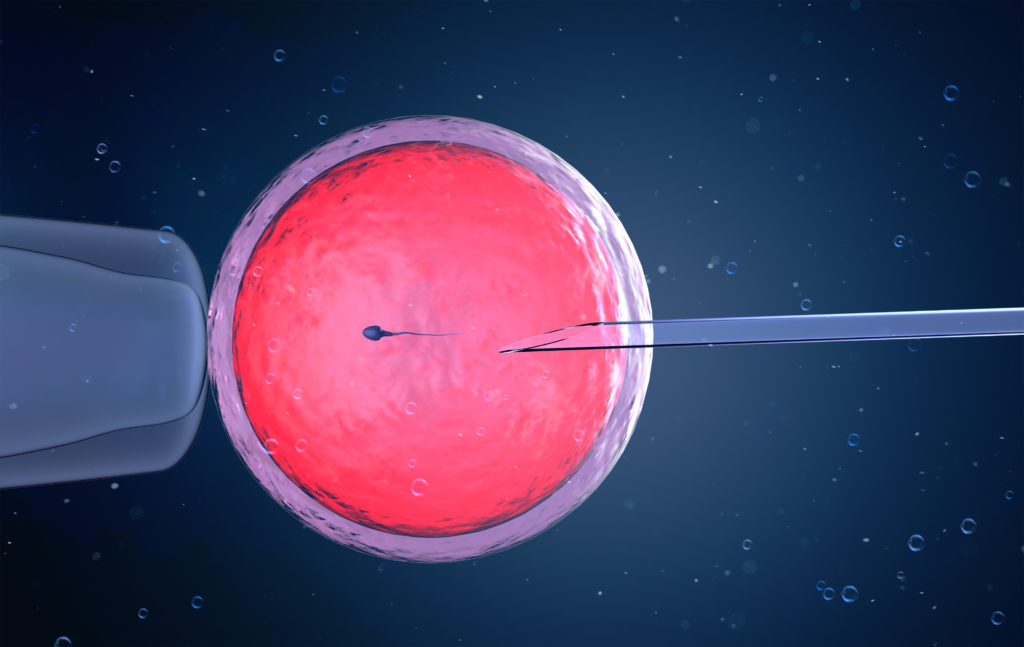
Scientists have successfully synthesized human sperm and eggs from skin cells in laboratories for many years now. Further, they have successfully fertilized and created viable embryos with these synthetic gametes.
The Process:
STEP 1) Skin cells are induced via “cellular reprogramming” to become pluripotent (able to develop into any type of cell).
STEP 2) IVG changes pluripotent cells into human gametes (eggs and sperm) using chemical signals.
STEP 3) The egg is fertilized with sperm in vitro (in lab dish) to create an embryo. The embryo is then transferred into a womb via In Vitro techniques.
This is reproduction using synthetic gametes. The goal is to offer hope to those who are infertile due to having no viable sperm or eggs. It could allow same sex reproduction and would lead to the creation of scores of embryos for genetic screening or further research and destruction. Healthy offspring have been produced using IVG in animals. Human IVG embryos have been successfully created in laboratories across the world for years. However, they have not yet resulted in a successful pregnancy, due to chronic chromosomal abnormalities that cause embryo instability. This makes the IVG process excessively risky for children created in this manner.
SIDE NOTE: University research makes innovative technology possible, while companies make it commercial. In the US, the University of California in LA, Oregon Health Science University, and Brown University lead the way in IVG research over the last decade. Prominent IVG business startups include Conception Biosciences, Ivy Natal, and Gameto, who are gearing up for production of IGV eggs and sperm.
Artificial Wombs:
This is a medical system that allows a fetus to develop outside a human body in a fluid-filled environment that mimics the uterus. Synthetic wombs have successfully been used to bring premature sheep and other mammals to gestation from the second trimester onward.
In April of 2017, researchers at Children’s Hospital of Philadelphia created the world’s most successful artificial womb, the “BIOBAG”, and published their invention in the Nature Communications Journal. The primary goal of the BIOBAG is to help extremely premature infants survive, which is laudable. The earliest age of the fetus that qualifies for an artificial womb has been set at 22 weeks (arbitrarily?), which is an interesting date due to ‘viability’ at 22 weeks. This restriction may be intended to preserve the institution of abortion.
This technology is successful with animals, and is nearly for humans, causing dozens of major startups to be formed worldwide in anticipation of commercialization. In the US, Vitara Biomedical out of Philadelphia is the frontrunner. The Netherlands has AquaWomb to represent Europe, while Japan and China have strong government and industry investment in their artificial womb versions. The FDA has been reviewing this technology since 2022, and approval for human trials is said to be imminent.
What are our concerns?
- IVG: Multiple embryos will be created per patient, just as with IVF. Those not used will be destroyed or frozen indefinitely. Genetic screening will choose winners and losers, creating a new opportunity for eugenics. Additionally, this could lead to a loss of genetic diversity, which could prove fatal to humanity. If our gene pool shrinks, our race would be more vulnerable to deadly pathogens. Currently, there are no consistent regulations governing embryo creation amounts, selection criteria, or destruction. There is no proof that an IVG baby has or has not been born yet. However, technology historically doesn’t wait for ethical consensus, and the law lags behind both.
- Artificial Womb: The serious risks of this ground-breaking technology are yet unknown. The lost physiological and emotional bonds between mother and fetus may have long-term adverse effects. If the fetus is grown entirely outside the body, surely these risks would be substantial. The future abuse of this is easily predicted. Conceivably, “perfect” humans could be mass produced, leading to social inequity at best, and super-human armies at worst.
Complete Exogenesis- IVG and Artificial Wombs = reproduction without natural gametes, or pregnancy. If embryos are grown entirely outside the body, reproduction will become industrialized. If the pairing of IVG and Artificial wombs becomes a common single reproductive system as expected, it will change what it means to be human.
References:
https://www.sciencedirect.com/science/article/abs/pii/S0015028225001074
https://www.thelancet.com/journals/lanogw/article/PIIS3050-5038(25)00052-4/fulltext